Home Features Business and Clinical Innovator
Features
Business and Clinical Innovator
Written by John Worley   
July 2006

In the late 1990s, Terry Bruce was fed up, and more than a little bit desperate. A member of her immediate family, someone she loved and cherished greatly, had just finished yet another traditional treatment program and had, yet again, promptly relapsed. "I wanted to help them, but what we had been doing didn't appear to be working. I resolved to find out whether there was an alternative that could help my loved one."

HouseAt that point, Bruce, who has many in her family who suffer from alcoholism, had no idea that she would wind up starting a new treatment center. But in the end that's exactly what she did, founding Assisted Recovery Centers of Georgia, ARCA Georgia, in Savannah six years ago. As Bruce was researching treatment options for her family members, she came across information about pharmacological- based treatments she thought that might be of help. "I found out about treatments like naltrexone, Campral Suboxone and others," said Bruce, adding that addictionologists at the University of Pennsylvania were particularly helpful with guidance and advice in this area.

Bruce then began calling around to local treatment centers to find out whether they offered any of the pharmacological treatments, inevitably running into the treatment industry's famous "pharmacophobia." While understanding where the negative reaction was coming from - the treatment industry has for decades dealt with millions of addicted individuals who have got that way due to over liberal use by doctors of their prescription pads - Bruce was also frustrated. "Not only did no one offer the treatments, but most were vociferously opposed to them." That's when Bruce began look into whether there were approaches to addiction treatment that were more medical in nature, discovering that there indeed were such programs, one of which was called Assisted Recovery Centers of America, founded in 1997 by Lloyd Vacovsky in Phoenix. Inspired by the approval in 1995 of naltrexone for the treatment of alcoholism and other addictions, Vacovsky started Assisted Recovery Centers as the first center in the country to adopt the "Pennsylvania Model" of treatment. Different from the Minnesota Model because it is not 12-step based, the model instead emphasizes meds like naltrexone combined with intensive cognitive therapy.

Becoming increasingly frustrated with the response she was getting from treatment centers, Bruce thought about opening one of her own. "I asked Lloyd what it takes, and he said just $5,000 and credit card." Fast forward 6 years, and Bruce's ARCA Georgia has now treated over 500 individuals. Initially starting with one center in Savannah, Bruce three years ago expanded into the Atlanta market with a new center. Like Assisted Recovery Centers of America, ARCA Georgia follows the Pennsylvania Model, offering anti-craving medications like naltrexone and Campral in combination with cognitive therapy. "We are not at all against the 12-steps, and our clients can attend AA meetings while in treatment with us. But we think that treatment has to be a lot more than just AA. The recent advancements in our understanding of addiction as a brain disease need to be incorporated, as well as other effective therapeutic approaches."

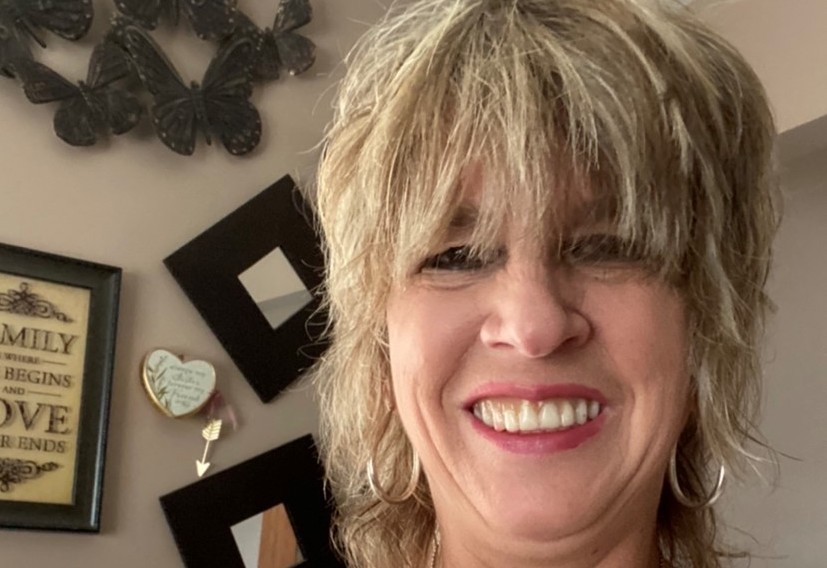
Terry Bruce, founder of ARCA GeorgiaIn addition, Bruce has adopted a highly flexible business model that allows her to scale her operations up or down based on demand for services. Operating with just three full time employees, Bruce adds staff when needed through contractual arrangements she has with various counselors, therapists, doctors and nurses. "The flexibility of this business model has been important to our success," says Bruce, adding that ARCA Georgia even provides in home detoxes in certain cases, supervised by doctors and nurses who visit the client several times a day. About 75 percent of ARCA Georgia's clients come from outof- town, staying in nearby hotels and attending treatment at the center. "Some stay at very high-end hotels and some stay in more modest accommodations," says Bruce, adding that this arrangement also gives flexibility because it allows the center to market to a broader array of income brackets. Nevertheless, Bruce is in the midst of negotiations to purchase a house near the center so that she can offer those who are interested a package of both housing and treatment. ARCA Georgia's program typically lasts two weeks, which costs $12,500. But there is also a four week program that costs $15,000. "Most of our clients elect to go for the two week program," says Bruce, adding that for those who are in treatment for opiates, the program is a minimum of four weeks.

In late June, Bruce negotiated the sale of a majority stake in her Atlanta operation to an Atlanta-based technologist for Lucent Technologies named Shawn Lemley. Initially a student of the social sciences in university, Lemley had wanted to spend a career helping people, but got side tracked by lucrative opportunities that arose during the Internet and telecommunications booms of the late 1990s. Bruce says that the Atlanta operation was performing well enough, but she felt it could be doing better. "I realized that I needed a partner to help make the Atlanta center reach its potential," says Bruce. "I found that with running the Savannah operation I just didn't have the time to devote to building up the Atlanta center, which is where Shawn will come in."


Current Issue: March 2009 | Subscribe Now!

current issue

Special Report
Newport Academy

PaRC’s New Program

Caron’s Breakthrough


On the Cover: Scott Sowle Executive Director & Co-Founder Newport Academy

Follow Treatment Magazine on Twitter!
Become a fan of Treatment Magazine on Facebook!